Add Row
Add Element
The Karate Edge Logo
update
The Karate Edge
update
Add Element
  • Categories
    • Martial Arts Training
    • Self Defense & Practical Skills
    • History & Philosophy
    • Injury Prevention/Recovery
    • Competitive Karate & Belt Advancement
    • Mind & Body Conditioning
    • Women's Martial Arts
  • Home
April 14.2025
3 Minutes Read

Discover the Depth of Budo Karate: Hauke and Marieke's Training Journey

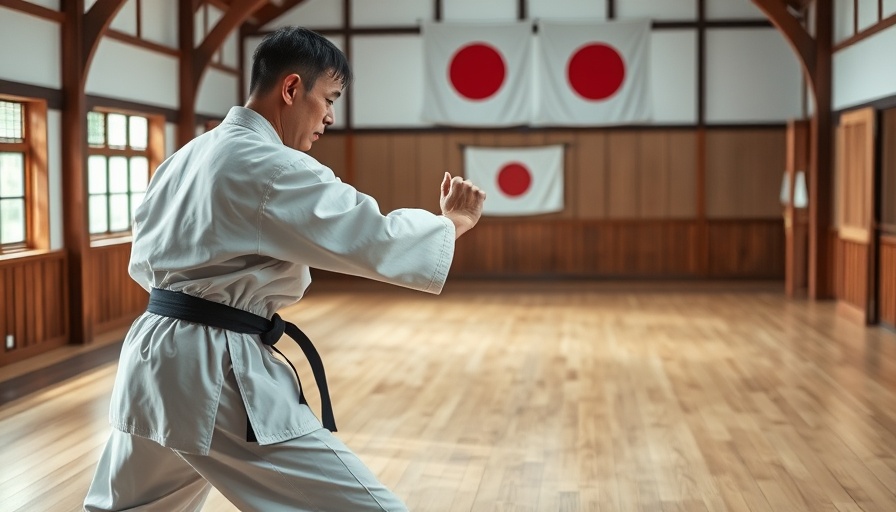
Renshusei training in Budo Karate dojo with traditional decor.

Unveiling the Depths of Budo Karate in Oita

The journey of martial arts often combines rigorous training with personal growth, and for two dedicated practitioners from Hamburg, Germany, their recent trip to Oita is a testament to this unending pursuit. Hauke and Marieke Johannßen, seasoned martial artists with ranks of Shodan and Yondan respectively, immersed themselves in an enriching four-day workshop that focused on deepening their understanding of Budo Karate.

Since their first seminar in 2010, Hauke and Marieke have exhibited an unwavering commitment to perfecting their craft. Their latest endeavor in Japan not only bridged the gap between geographical distances but also solidified the bonds formed through shared experiences in martial arts. “It was great spending time together,” remarked André Bertel, their instructor, emphasizing the camaraderie and learning that transcends mere technical skills.

Renshusei Training: Basics Within Basics

The workshop’s emphasis on "Basics inside of the basics" was a theme that resonated throughout their training sessions. Participating in Renshusei (intensive training), the duo explored advanced kihon (basics) in Budo Karate, exposing them to intricacies often overlooked by casual practitioners. This training introduces a profound understanding of techniques such as kubi no shisei (neck posture) and sokuto no shime (cutting with the foot), which are foundational for mastering more complex forms.

Such depth of training is crucial for those looking to evolve in martial arts, empowering students to recognize that even the most fundamental skills can yield great insights when taught with precision and intention.

Bridging Kihon and Kumite Practices

Through practical demonstrations, André Bertel introduced Hauke and Marieke to 常行一勢 (Joukou Issei), a method harmonizing Kihon and Kumite practices. An enlightening cross-reference of kata from the Heian and Tekki series to modern applications of Kumite provided invaluable insights into the connection between forms. The importance of bunkai (application) was integral in highlighting how kata can enhance real-world fighting techniques.

According to Bertel, this focus offers students a path to discovering the purpose behind karate movements, a necessary component that elevates practice from physical exercise to a philosophical exploration.

Cultivating Mastery in Kumite Forms

Over four days, the distinct styles of Kumite were tackled thoughtfully: 五本組手 (Gohon Kumite), 基本一本組手 (Kihon Ippon Kumite), 自由一本組手 (Jiyu Ippon Kumite), and 自由組手 (Jiyu Kumite). Each form plays a vital role in training, fostering respect, discipline, and a deeper sense of community among practitioners.

This holistic approach, promoting both technical proficiencies and philosophical underpinnings, encourages martial artists to uphold the tradition of Karate while adapting to modern contexts.

Why Budo Karate Matters

As martial arts enthusiasts, understanding the intricacies of Budo Karate is paramount not only for personal growth but also for creating a supportive community. Hauke and Marieke’s intensive training are examples of how workshops can play a pivotal role in reinforcing fundamental aspects of martial arts.

For those in Gurnee seeking to find their footing in martial arts, classes from Karate lessons to self-defense training can provide essential skills and insights. Whether you are looking into Gurnee martial arts schools or state-of-the-art fitness martial arts programs, opportunities abound to learn from experts who value both technique and philosophy.

Engage Your Journey in Martial Arts

Participating in martial arts offers benefits well beyond physical fitness. It builds mental resilience, fosters discipline, and cultivates community ties. As students and trainers endeavor to learn and grow together, the teachings of mentors like André Bertel empower individuals to dive deeper and explore their potential.

Explore the local offerings for martial arts classes in Gurnee and take the first step on your own journey. Embrace the essence of Budo Karate, and who knows? You may discover a path that profoundly impacts your life.

Self Defense & Practical Skills

Write A Comment

*
*
Related Posts All Posts
12.13.2025

Unlocking Shǒubó: Its Impact on Modern Karate for Self-Defense

Update Understanding Shǒubó: A Brief OverviewShǒubó (手搏), often translated as "hand combat," has deep historical roots in China's martial arts culture. Unlike formalized fighting styles, it represents a broad concept describing unarmed combat techniques used in situations where weapons were impractical or had been lost. This notion, prevalent during the Eastern Zhou dynasty, signifies a foundational element of physical confrontation that has influenced numerous martial traditions.Historical Context of ShǒubóThe earliest documented references to Shǒubó can be traced back to the Zhouli (Rites of Zhou), which articulates various physical contests tied to military training for officials in the late Warring States and early Han periods. Although the Zhouli does not explicitly mention Shǒubó, it points to a recognition of unarmed combat as a necessary skill among military personnel and state officials. Such acknowledgment illustrates the cultural and historical significance of hand combat practices in ancient China.Relevance to Today’s Martial ArtsIn contemporary martial arts, understanding the principles of Shǒubó can enhance training in practical karate applications and self-defense techniques beneficial for real-world scenarios. Schools in places like Gurnee, Illinois, offer classes on realistic karate applications, catering specifically to adults seeking effective self-defense strategies. This integration of Shǒubó's principles into modern training reflects its enduring legacy and adaptability.Common Misconceptions about Historical Martial ArtsMany enthusiasts assume that traditional martial arts were rigid and strictly defined during their early inception. However, disciplines like Shǒubó highlight the fluidity of combat techniques throughout history. The lack of formalized manuals from earlier periods underscores how adaptable and practical these fighting methods were, shaping martial arts as we know it today.Martial Arts Training Options in GurneeIf you're interested in exploring the foundational techniques of Shǒubó and their application, Gurnee offers a variety of karate programs aimed at adults. From hapkido to applied Shotokan, local martial arts schools emphasize realistic training and the development of combative skills that are practical for personal safety and street defense. This hands-on approach ensures that practitioners not only learn techniques but also understand their application in real-life situations.Conclusion: Embracing Traditional Techniques for Modern NeedsWhether you're looking to gain confidence, develop discipline, or learn effective self-defense strategies, understanding Shǒubó and its principles can greatly enhance your martial arts journey. Explore local classes and seminars in Gurnee, Illinois, and see how these ancient techniques can be articulated into your training for practical benefits today.

12.12.2025

Unlocking the Secrets of Kyusho for Real-World Self-Defense

Update Unraveling the Mysteries of Kyusho Kyusho, also known as kyusho jitsu, is a fascinating discipline within martial arts that delves deep into the manipulation of vital points on the human body. This practice is not limited to Karate—it's an essential element of various martial arts, including Jujutsu and certain styles of Kung Fu. The techniques of Kyusho have been refined and handed down through generations, emphasizing targeted strikes to induce pain or incapacitate an opponent effectively. What is Kyusho? At its core, Kyusho is the art of understanding and exploiting pressure points or vital points within the human body. It combines techniques aimed at attacking these areas for self-defense and to gain an advantage in combat scenarios. A solid grasp of human anatomy and the nervous system is crucial for Maximal efficacy. Focused strikes on points such as the neck, underarms, and joints can disrupt an opponent's balance and effectiveness in combat. Some practitioners relate these areas to meridian theory as they align with principles found in Traditional Chinese Medicine (TCM). Kyusho vs. Dim Mak: Understanding the Differences While some may intertwine the concepts of Kyusho and Dim Mak, they are not synonymous. Dim Mak focuses heavily on the timing and placement of strikes to influential points, potentially causing delayed effects. Kyusho, contrastingly, prioritizes immediate impact through well-placed strikes targeting nerves and vital structures. A deeper understanding of anatomy and effective application is pivotal in mastering either discipline, but practitioners often find that breaking away from myths can significantly enhance their skills. The Importance of Anatomy in Kyusho Unlike many misconceptions surrounding pressure point theory, successful practitioners of Kyusho argue that understanding the underlying anatomy is crucial to effectiveness. The relevance of larger anatomical structures—the nerves and muscles—comes into play when targeting key points. Ignoring these detailed anatomical layers can limit the effectiveness of techniques. For instance, specific points, like GB-20 on the neck, overlay critical nerve structures; thus, a skilled practitioner must know not only the location but also the anatomical relationship of these points to maximize their techniques in real-life situations. Practical Applications of Kyusho Techniques in Self-Defense Understanding and applying Kyusho techniques can vastly improve one’s self-defense skills, particularly in practical karate training. While traditional martial arts emphasize kata and movement, the ability to execute swift, precise strikes at vital points offers a real-world advantage. This skill set is essential for adults engaged in self-defense training and can be adapted for various situations, whether within a dojo in Gurnee or a self-defense scenario outside. Training on such practical techniques should be incorporated into karate programs to enhance the overall effectiveness of the martial arts experience for students. Realistic Martial Arts Training: The Path to Improvement Realistic martial arts training is about adapting ancient philosophies and practical skill sets for modern applications. Incorporating kyusho techniques into practical karate training or combative karate instruction provides essential tools for practitioners. They learn to consider not just the martial syllabus but also the diverse applications of techniques that make sense in a confrontation. Workshops and seminars focusing on kata-based training and realistic self-defense strategies can strengthen the martial artist's overall effectiveness in combat. Get Started with Kyusho Training Near You If you are seeking to enhance your self-defense capabilities or dive deeper into the world of traditional karate and its applications, consider enrolling in comprehensive kyusho or kata bunkai classes available nearby in Gurnee, IL. The synergy of theory, practice, and understanding anatomy will serve not only as a tactical advantage but also foster personal growth and discipline. The Martial Artist's Journey Mastering Kyusho is a continuous journey that demands patience, diligence, and a willingness to shed old misconceptions in favor of scientifically supported methods. Embracing the intricacies of human anatomy and the philosophy of kyusho allows practitioners to cultivate a well-rounded martial arts practice that is reliable and realistic, adapting to the needs of modern self-defense training. For those looking to deepen their understanding of kyusho techniques and apply them in practical settings, numerous local dojo and martial arts schools in Lake County, IL, offer specialized instruction. Engage in insightful workshops and develop your skills in personal safety training through applied martial arts techniques. Start your journey today!

12.09.2025

Discover the 15 Essential Life Skills from Taekwondo Training in Gurnee

Update Unlocking Life Skills Through Taekwondo Training in Gurnee Taekwondo is not merely a martial art; it’s a disciplinary journey that imparts remarkable life skills to practitioners. Whether you are a child, teenager, or adult, engaging in Taekwondo in Gurnee offers you an opportunity to develop crucial capabilities that extend far beyond the dojo. Let’s explore how the practice of Taekwondo cultivates character, confidence, and resilience while improving emotional wellness. Enhancing Self-Confidence and Mental Resilience One of the foremost benefits of practicing Taekwondo is the boost in self-confidence it provides. As practitioners learn new techniques and progress through the colored belt system, they witness their capabilities grow before their eyes. This ongoing development fosters a sense of pride and accomplishment that permeates various facets of life, from academic pursuits to professional endeavors. Not only does this manifest in self-assurance during sparring sessions, but it also translates to greater confidence in social settings and public speaking. Furthermore, the environment of a Taekwondo class offers constructive feedback and support. Such reinforcement from instructors and fellow students helps solidify a positive self-image, encouraging participants to overcome challenges with a 'can-do' attitude. This empowerment directly correlates with enhanced mental resilience, a critical trait for weathering life's ups and downs. Discipline as a Path to Success The structured regimen of Taekwondo promotes discipline and commitment, essential qualities for achieving any goal. Practicing regularly demands that students prioritize their training, setting aside time for mastering techniques while balancing academics, work, or other responsibilities. This commitment instills a strong sense of discipline, teaching individuals that perseverance is key to success. Adopting such a mindset carries over to all life aspects, resulting in improved focus on tasks like studying for exams or executing professional projects. Physical Fitness and Health Benefits The physical demands of Taekwondo training contribute to improved fitness levels. In addition to building strength and flexibility, the dynamic movements involved provide an effective cardiovascular workout. Making Taekwondo a part of your routine enhances endurance and agility while promoting a healthy lifestyle. Participants find that as their physical fitness improves, they become eager to engage in other forms of exercise, contributing to overall well-being. Respect and Interpersonal Skills Taekwondo training emphasizes respect, not just for instructors and peers but also for oneself and the environment. Practitioners learn to appreciate different perspectives, fostering empathy as they interact with classmates. This newfound respect leads to stronger interpersonal relationships both inside and outside the dojo. Conflict resolution becomes easier as students become adept at communicating and navigating disagreements calmly and respectfully. Goal-Setting Skills for Everyday Life The journey to advance through the ranks in Taekwondo provides robust lessons in goal-setting. Each belt represents a milestone achieved, teaching participants the importance of breaking large ambitions into manageable steps. This skill is deeply transferrable, empowering individuals to plan and execute their life goals effectively, whether that includes personal fitness milestones, academic achievements, or career aspirations. Emotional Healing and Mindfulness Through Martial Arts Engaging in martial arts like Taekwondo is increasingly recognized for its mental health benefits. Studies show that martial arts training can enhance emotional resilience, decrease anxiety, and help manage emotions effectively. The focused mindfulness required during training enables practitioners to stay present, reducing stress and promoting mental clarity. Utilizing Taekwondo as a tool for emotional wellness, students learn to channel their feelings constructively, leading to healthier emotional experiences. Conclusion: Embrace Transformation Through Taekwondo In summary, the practice of Taekwondo provides invaluable life skills that equip participants to navigate the complexities of everyday life. From fostering mental resilience and discipline to promoting emotional adjustment and interpersonal respect, Taekwondo facilitates personal growth. Gurnee residents seeking a transformative experience need look no further than local Taekwondo training centers, where they can embark on a journey of self-discovery and empowerment. If you're interested in cultivating these skills, exploring local training centers is the first step towards a more confident and disciplined you. Don't wait—unlock your true potential through Taekwondo!

Terms of Service

Privacy Policy

Core Modal Title

Sorry, no results found

You Might Find These Articles Interesting

T
Please Check Your Email
We Will Be Following Up Shortly
*
*
*