
Add Row
Add Element
The Karate Edge Logo
update
The Karate Edge
update
Add Element
  • Categories
    • Martial Arts Training
    • Self Defense & Practical Skills
    • History & Philosophy
    • Injury Prevention/Recovery
    • Competitive Karate & Belt Advancement
    • Mind & Body Conditioning
    • Women's Martial Arts
  • Home
March 27.2025
3 Minutes Read

Unlock Your Potential: Why Meditation is Key to Tournament Success

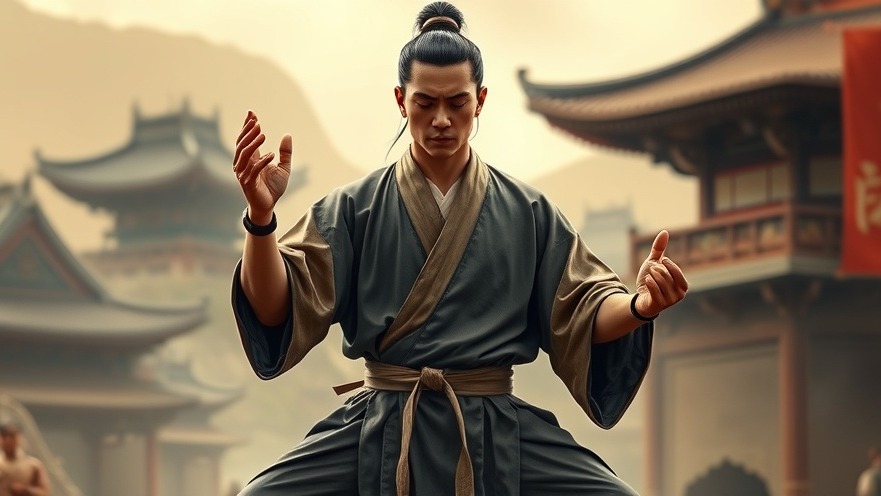
Martial artist in meditation pose, demonstrating mental preparation techniques for anxiety reduction.


From Anxiety to Action: The Power of Meditation in Martial Arts

As competitors gear up for their time under the spotlight, anticipation fills the air. The excitement is palpable, and so are the nerves. In these high-pressure moments, the ultimate weapon might just be the art of meditation. This ancient practice, deeply rooted in martial arts tradition, equips athletes to rise above pre-competition anxiety and stay focused amidst the chaos of the tournament arena.

The Science Behind Meditation and Performance

Research recently published in the Journal of Cognitive Enhancement sheds light on the physiological benefits of meditation. It suggests that even short sessions can significantly lower cortisol levels, a hormone associated with stress. Lowering stress isn't just about feeling calm; it enhances attention and allows martial artists to maintain precision in their techniques when it matters most.

Moreover, neuroimaging studies demonstrate the positive effects of regular meditation on the brain. The prefrontal cortex, which governs decision-making and impulse control, grows stronger with meditation practice. This scientific validation supports what many martial arts masters have asserted for centuries: the battle is first won in the mind.

The Journey of a Martial Artist: Forging the Mental Blade

Imagine your mind as a sword being forged. Your physical skills are the raw material, but honing those skills into something exceptional requires mindful tempering through meditation. Just as a sword must be heated and cooled in the hands of a master smith, so too must your cognition be exercised and refined. Meditation serves this purpose, creating resilience and focus that can be called upon when facing opponents on the mat.

Ancient Wisdom Meets Modern Techniques

The ancient warriors understood the balance of physical and mental preparation. They practiced meditation not merely as a means of relaxation but as a critical component of their training regimens. This transcends cultures and eras, with various forms of meditation being integrated into martial practices worldwide. Today, modern science provides the evidence that validates these age-old techniques.

The connection between ancient wisdom and modern understanding becomes a bridge for those preparing for competition. By engaging in guided meditations that draw from various martial arts philosophies, competitors can find both comfort and direction, fostering a sense of community with fellow practitioners.

Embracing the Competition Environment

Whether it’s your first competition or you’ve been on the mat many times, the fear of failure and self-doubt can increase anxiety levels. However, understanding these feelings as part of the process can be beneficial. It's important to remember that every competitor in the arena experiences similar sensations; they are just as aflame with nerves and expectation.

Finding ways to channel this energy into positive action is key. Guided meditation can serve as a form of mental warm-up, allowing competitors to clarify their thoughts, visualize success, and prepare mentally before stepping onto the mat.

Actionable Meditation Techniques for Competitors

For those interested in integrating meditation into their competitive preparation, here are a few simple techniques:

  • Deep Breathing: Spend five minutes focused solely on your breath. Inhale deeply through your nose, hold for a moment, and exhale slowly. This calms the mind and prepares the body.

  • Visualization: Create mental images of successful performance. Picture the techniques you have mastered working perfectly in competition.

  • Focused Mantra: Choose a word or phrase that embodies your competitive spirit—such as ‘focus’ or ‘strength’—and repeat it during meditation.

By committing to these practices routinely, competitors can sharpen their mental state, fortify their spirits, and enhance their overall performance.

Connect with Your Martial Arts Community

The road to tournament success is made smoother with camaraderie and support. Engaging with your local martial arts community, finding training partners to meditate together, and sharing experiences can enrich the journey. This sport thrives on connection; embrace it.

As you prepare, remember the wisdom of ancient warriors: victory is first claimed within. Equip your mind as you would your body, and face the competition with confidence and clarity!

Remember, whether this is your first tournament or a return to a familiar mat, take the time to enlist the power of meditation. As you focus on your breath and center your mind, know that you are not alone in this process. The martial arts community stands beside you, sharing in the pursuit of excellence.


History & Philosophy

Write A Comment

*
*
Related Posts All Posts
12.12.2025

Unlocking the Secrets of Jiǎo Lì: Ancient Techniques for Modern Self-Defense

Update Understanding Jiǎo Lì: The Foundation of Chinese Wrestling Jiǎo Lì (角力) is not just a term; it's a representation of one of the earliest forms of unarmed combat dating back to ancient China. Often translated as "wrestling" or "grappling," Jiǎo Lì encompasses a broader spectrum of techniques that include throwing, controlling, lifting, and off-balancing opponents. Its origins are traced back to the Zhou Dynasty, marking a significant evolution in the art of hand-to-hand combat. Historical Significance: Documents that Shaped a Martial Art The earliest documented references to Jiǎo Lì appear in ancient texts like the Zhouli, which highlights physical training activities associated with grappling. Although these texts don’t detail exact techniques, they serve as a testament to the long-standing cultural relevance of structured unarmed contests. The Shiji also offers narratives of contests that include grappling actions, affirming the historical prominence of Jiǎo Lì within Chinese martial arts. The Han Dynasty: A Period of Structured Training During the Han Dynasty, Jiǎo Lì began to evolve more clearly into a recognized martial art. Public records of displays of strength and wrestling further cements its practicality and effectiveness within military contexts. Historian Wang Shixiang notes that these public demonstrations almost certainly included Jiǎo Lì techniques. Relief carvings unearthed from tombs in regions like Sichuan and Shandong showcase grappling stances, visually linking them to later styles, such as Shuai Jiao. A Crossroad: Jiǎo Lì and Shuai Jiao Jiǎo Lì often finds itself discussed in parallel with Shuai Jiao, another traditional form of Chinese wrestling, which shares its roots. Both systems emphasize grappling techniques, but while Jiǎo Lì focuses more exclusively on wrestling, Shuai Jiao incorporates a rich array of striking, joint locks, and throws. The evolution of these arts can be fascinating, as they highlight the blending of combat techniques that historically served military needs. Practical Application: Why Jiǎo Lì Matters Today For martial artists today, understanding Jiǎo Lì provides invaluable insights into traditional techniques that enhance contemporary self-defense practices. Within the context of a dojo or during self-defense training for adults, principles extracted from Jiǎo Lì can directly impact personal safety, street-effective karate techniques, and combative strategies. With classes focusing on these traditional forms of grappling, students can learn effective strategies grounded in centuries-old techniques while engaging in realistic martial arts training. Getting Involved: Finding Your Place in the Martial Arts Community If you’re in the Gurnee area and looking for traditional karate instruction that incorporates practical applications of Jiǎo Lì, there are several martial arts schools to explore. Programs like kata bunkai classes and practical Shotokan training can be especially beneficial. You might find that training not only develops physical skills but also builds confidence and discipline, essential attributes for personal growth. Conclusion: Embrace the Legacy of Jiǎo Lì As you explore the world of Jiǎo Lì and its application in contemporary martial arts, consider integrating these techniques into your practice. Understanding the roots of wrestling can profoundly influence your self-defense capabilities and martial arts philosophy. Start your journey today and experience the rich legacy of Jiǎo Lì!

12.12.2025

Exploring Jiǎo Lì and Shǒubó: Your Guide to Practical Karate Training

Update Understanding Jiǎo Lì and Shǒubó: A Historical Perspective Jiǎo Lì (角力) and Shǒubó (手搏) often come up in conversations surrounding Chinese martial arts, enriching the narrative of unarmed combat's evolution. At first glance, scholars like Stanley Henning have pointed out their shared roots in military preparation and the physical training of fighters. However, a meticulous analysis reveals that while they are contemporaries in history, their techniques and purposes vary significantly. The Origins and Descriptions of Jiǎo Lì Jiǎo Lì boasts a rich historical lineage, predating Shǒubó and appearing prominently during the Zhou dynasty. Within Zhou texts, Jiǎo Lì is portrayed as a contest of strength, focusing primarily on gripping, lifting, and throwing techniques. Archaeological finds from the Warring States period depict figures engaged in grappling, hinting at structured training methods. Yet, the absence of direct references to striking techniques suggests that Jiǎo Lì is fundamentally a grappling art, focused on the physical contest instead of combative engagement. Shǒubó: Expanding the Definition of Combat Conversely, Shǒubó emerged later, specifically within Han-period literature, but its methodologies are not explicitly defined in historical texts. Although the Zhouli refers to physical training generally, it omits any mention of Shǒubó. The Hanshu does discuss contests, but without detailed descriptions. This lack of clarity invites historians to interpret Shǒubó as an art that potentially includes a wider array of skills—grappling, joint manipulation, and striking—albeit without structured guides. This interpretive evolution points towards an art that may have been integrated into formal military training. Key Differences: Purpose and Context One of the notable distinctions between Jiǎo Lì and Shǒubó is their intended purpose. Jiǎo Lì is predominantly referenced within the context of contests and trials, while Shǒubó subtly alludes to military training in Han texts. This contextual variance implies that Shǒubó served a functional role in combat readiness, potentially mirroring the adaptations of martial systems as they evolved for practical applications in warfare. The Modern Relevance of Historical Martial Arts In contemporary settings, understanding these martial arts not only enriches one's knowledge of combat history but also informs practical training techniques today. For individuals interested in self-defense or practical karate training, seeking a dojo that focuses on kata bunkai can provide insights into traditional approaches while applying them in real-world scenarios. In places like Gurnee, IL, martial arts schools focus on applied techniques, combining historical insight with modern self-defense applications. Final Thoughts: Choosing the Right Training Approach The varying historical contexts of Jiǎo Lì and Shǒubó serve as poignant reminders of how martial arts have morphed over centuries. For practitioners and hobbyists, blending historical knowledge with modern self-defense training can enhance their understanding and effectiveness in combative situations. For those in Gurnee exploring karate classes, consider institutions that emphasize practical instruction and combative philosophies reflective of this rich historical past.

12.03.2025

Discover How the Ten Tigers of Canton Shaped Martial Arts and Community

Update Understanding Cantonese Martial Arts Through the Ages In exploring the legacy of the Ten Tigers of Canton, one must first immerse themselves in the rich fabric of Cantonese history. The late Qing Dynasty was a crucible of social upheaval, where martial arts served as both a physical discipline and a cultural haven. At that time, the arts were nurtured under clan systems, and public schools began to emerge, fostering a bustling exchange of techniques and styles. This atmosphere was ideal for warriors, leading to the rise of legendary figures whose reputations outshone their contemporaries. Who Were the Ten Tigers? The Ten Tigers of Canton include esteemed figures such as Wong Fei-Hung and his father, Wong Kei-Ying, along with notable masters like So Hut-Yi, Tam Chai-Gon, and Tit Kiu-Sam. Each of these martial artists brought unique skills and philosophies to the martial art forms they practiced, shaping not just their legacies but the trajectory of Southern Chinese martial arts. Notably, Wong Fei-Hung became a symbol in popular culture, celebrated in films, and stories for his moral righteousness as much as his martial prowess. The Tigers as Guardians of Culture As community protectors, the Ten Tigers embodied the spirit of the Kung Fu tradition, advocating for justice and righteousness amidst a backdrop of oppression. Their lives and teachings preserved the essence of fighting arts in a time when such knowledge was at risk of being lost. They stand as a testament to what martial arts can achieve—not only in personal excellence and preservation of techniques but in moral and social duties. Legends That Endure In today's world, the techniques and virtues embodied by the Ten Tigers resonate deeply with practitioners. Many martial arts schools, including those around Gurnee, carry forward their teachings, not only emphasizing physical skill but also instilling values of compassion, respect, and community responsibility. Schools offering martial arts classes for children and adults aim to develop mindful warriors who appreciate the practices as paths to personal growth and character building. Embracing the Learning Process Learning martial arts often brings emotional and mental benefits that parallel the physical training. Students of all ages frequently find empowerment and focus through martial arts practice, commonly asked questions among instructors include, "How does martial arts help mental health?" or "Is karate good for anxiety?" Answers reveal not only the techniques mastered but also skills such as emotional regulation and resilience forged through training. Take Action: Join the Martial Arts Wave Understanding the stories and practices behind the legends of the Ten Tigers offers invaluable insights into martial arts' role as a cultural and personal discipline. For those ready to take the next step, why not begin your own journey? Enroll in martial arts classes near you in Gurnee, where you can learn not just to defend yourself but also the enriched history and philosophy behind every move. As you embark on this path, remember: True martial arts is about much more than self-defense; it’s about embodying the values of courage, honor, and resilience that the Ten Tigers inspired throughout their storied lives.

Terms of Service

Privacy Policy

Core Modal Title

Sorry, no results found

You Might Find These Articles Interesting

T
Please Check Your Email
We Will Be Following Up Shortly
*
*
*