
Add Row
Add Element
The Karate Edge Logo
update
The Karate Edge
update
Add Element
  • Categories
    • Martial Arts Training
    • Self Defense & Practical Skills
    • History & Philosophy
    • Injury Prevention/Recovery
    • Competitive Karate & Belt Advancement
    • Mind & Body Conditioning
    • Women's Martial Arts
  • Home
August 31.2025
2 Minutes Read

Muaythai Unites China and Thailand: A Cultural Exchange Journey

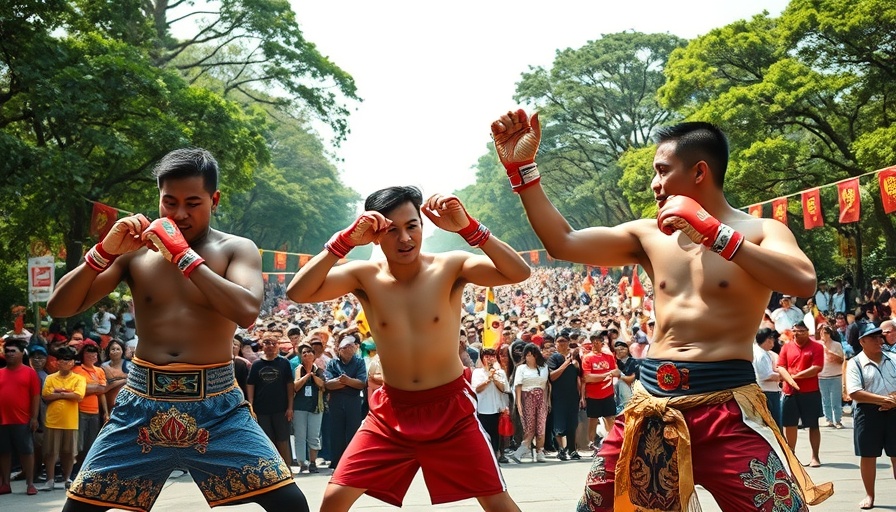
Muay Thai performers showcasing skills in China with large audience.

Celebrating Diplomatic Ties through Muaythai

In 2025, Thailand celebrated 50 years of diplomatic relations with China through a series of exciting cultural showcases centered around its traditional martial art, Muaythai. This vibrant initiative utilized martial arts as a unique tool for cultural diplomacy, emphasizing strength, traditions, and the spirit of both nations. Events were held across five major Chinese cities: Beijing, Qingdao, Guangzhou, Xi’an, and Kunming, highlighting the importance of soft power in international relations.

The Role of Sport in Diplomacy

The rendezvous between Thailand and China is an embodiment of how sports can transcend borders and promote mutual understanding. With both Muaythai and China's Wushu gaining Olympic recognition, their combined presence at events like the World Games illustrates a commitment to collaboration that is deep-rooted in history. This partnership models how international sports can foster connections and cultural appreciation across the globe.

Highlighting Performances and Cultural Exchange

The cultural diplomacy celebrations highlighted the synergy between traditional ceremonies and modern sports techniques. Thai legend Buakaw Banchamek, during the tour, not only showcased his athletic prowess but also educated the Chinese audiences about the spiritual dimensions of Muaythai through traditional Wai Kru ceremonies.

Community Engagement through Workshops and Demonstrations

Incorporating workshops and demonstrations, the Muaythai events engaged communities at a grassroots level. These interactions allowed local families and youth karate enthusiasts to experience the intricacies of Muaythai, creating lasting connections between cultures. For instance, during the TWG Plaza Cultural Showcase in Chengdu, participants could enjoy not just performances but also interactive demonstrations that brought the martial art closer to their everyday lives.

Preparation for Future Events and Presidential Visits

The significance of the celebrations was further enhanced by the anticipated state visit from Thailand’s King Maha Vajiralongkorn and Queen Suthida to China. Royal patronage symbolizes the importance of Muaythai, not just as a sport but as a cultural pillar that strengthens bonds between nations. Such high-profile visits create additional opportunities for further exchanges in the martial arts landscape.

Reflecting on National Identity through Martial Arts

Muaythai serves not only as a sport but as a mirror reflecting Thailand's national identity and values. The cultural aspects of the sport resonate deeply with traditional themes of respect, discipline, and harmony, making it an ideal ambassador for Thailand on the international stage. This rich tapestry of cultural heritage is what makes martial arts fascinating to many students and practitioners alike.

Take Action: Join the Karate Community!

With the essence of martial arts resonating through the Thailand-China cultural exchanges, now is a perfect moment to get involved in karate classes at Gruber's Karate in Gurnee! Whether you're looking to improve self-defense skills or simply want to engage in a fulfilling activity, our dojo is enrolling new students. Act fast, as classes fill quickly! Contact us for more details.

Gurnee’s 5 Star Rated Martial Arts School Is Enrolling New Students, Act Fast, Classes Fill Quickly!Sensei@gruberskarate.comGruber's Karate5725 Stearns School RdGurnee, IL 60031(224) 347-6655GrubersKarate.com

Self Defense & Practical Skills

0 Comments

Write A Comment

*
*
Please complete the captcha to submit your comment.
Related Posts All Posts
04.08.2026

How to Balance Self-Perfection and Self-Protection in Karate Training

Update The Shift from Self-Defense to Self-Perfection: What’s at Stake? In the world of karate, the emphasis has often pivoted from self-defense to self-perfection. Many dojos now frame karate as a pathway to personal growth, focusing on character building and inner strength. This transformation, while noble, has led to a concerning neglect of one of karate's foundational principles: the ability to protect oneself. In this article, we explore how the evolution of karate affects modern practice and why self-defense remains crucial. Understanding the Evolution of Karate Initially developed for practical self-defense, karate has morphed significantly as it globalized. In Japan, for instance, it was adapted for school curriculums, where character development and discipline took center stage. Later, sport karate arose with structured competitions emphasizing safety and fairness rather than the raw effectiveness needed for real-world scenarios. This transition highlights a dilemma: while sport karate fosters respect and discipline among practitioners, it often does so at the cost of indispensable realism. Techniques practiced in controlled environments don’t always translate effectively to unpredictable streets. Real Violence vs. Sport Karate: The Distinct Divide Engaging in sport karate means adhering to rules—referees maintain order, and there are clear guidelines for strikes. However, real-life confrontations are chaotic and devoid of such structure. An unknowing practitioner might find themselves unprepared for an ambush or a street altercation where every second counts and improvisation is key. To adequately prepare for these situations, training that simulates real violence is critical. This practice goes beyond light sparring, demanding techniques that respond to unpredictable scenarios. Practical Karate Training: Essential Skills for Self-Defense For karate to revert to its roots in self-defense, instructors must reevaluate how techniques are taught. As is reflected in the community's growing interest in practical karate, methods like shadow fighting, target drills, and one-step sparring can enhance students' abilities. Although these techniques can also be practiced online, it's crucial that training involves realistic resistance and unpredictability. An effective way to develop these skills is by introducing protective gear. This allows students to push their limits safely while experiencing the necessary physicality required in genuine self-defense situations. Kata Bunkai: More than Just Theatre Understanding the applications of kata—known as bunkai—is pivotal for integrating techniques effectively into self-defense. Unfortunately, many dojos treat kata as a choreographed performance rather than a practical guide. Properly applied, kata can serve as a blueprint for survival, but its potential is squandered without realistic training. Incorporating resistance in bunkai practice bridges the gap between the dojo and real-life scenarios, fostering true preparedness. Join the Movement: Elevating Karate Back to Self-Defense As karate enthusiasts and instructors, it’s time to champion a balance between self-perfection and self-protection. With an increased focus on real-world self-defense, programs—such as practical karate training and kata bunkai classes—aim to reestablish karate’s original purpose. If you’re in Gurnee, IL, consider enrolling in a program that prioritizes realism in martial arts. Look for schools offering realistic self-defense classes that balance traditional practices with practical techniques to skillfully defend oneself in any situation. Join your local dojo today and take a significant step towards personal safety and empowerment through practical martial arts.

04.08.2026

Unlock Your Potential: How to Become a Certified Krav Maga Instructor

Update Unlocking Your Path: Becoming a Certified Krav Maga Instructor Are you fascinated by the powerful techniques of Krav Maga? Do you dream of teaching others how to defend themselves? Becoming a certified Krav Maga instructor is a rewarding journey that goes far beyond simply knowing the moves; it's about fostering resilience, confidence, and a sense of community. This article will guide you through the necessary steps and preparations, allowing you to embark on this incredible path. The Foundation: Become a Krav Maga Student The first step in becoming an effective instructor is to immerse yourself in Krav Maga training. You can’t teach what you haven’t practiced! Enroll in a Local Krav Maga School: Look for a qualified instructor in your area. Trying a free introductory class can help you gauge the environment that best suits your learning needs. Attend Krav Maga Seminars: Engage in short-term training programs to connect with other practitioners and further refine your skills. Online Training: If accessibility is a concern, enrolling in accredited online Krav MMA courses, such as those offered by Global Martial Arts University, can be beneficial. Step Two: Train and Earn Your Rank Your training should focus on mastering Krav Maga techniques and philosophies. While earning your first rank—often a Level 1 or Yellow Belt—this is your time to absorb as much knowledge as possible. Consider the timeline for when you can transition into instructor training; some schools will allow you to become an instructor after obtaining a specific belt, but caution against rushing through this process. Your experience on the mat is essential. Your Next Challenge: Certification Course Options Now that you have a solid foundation in Krav Maga, it’s time to find a certification course that fits your goals. Through these courses, you will not only learn specific techniques but also gain crucial teaching methodologies to support your future students: Look for a Course that Aligns with Your Experience: Various programs cater to different experience levels, ensuring that lessons are tailored to your specific background. Understand the Assessment Process: Be ready for physical demonstrations and theory assessments, crucial for confirming your readiness to teach. The Real Impact: Philosophy and Mindset of Training As you prepare for your instructor certification, remember that teaching Krav Maga transcends merely showing techniques. You are responsible for your students' safety and growth. Thus, develop a mindset that fosters understanding, respect, and resilience. This mindset reflects in how you conduct your classes and engage with your students' diverse needs. Significance of Continuous Learning and Mentorship Even once certified, the journey doesn't end. Maintain your skills through continual training and seek mentorship opportunities. Many certified instructors emphasize lifelong learning as essential for remaining effective in this rapidly changing discipline. Attending workshops and connecting with other instructors through platforms like a global instructor network will allow you to exchange ideas and refine your teaching strategy. Making a Difference: Your Role Within the Community As a certified Krav Maga instructor, you’ll have the unique opportunity to not only teach self-defense skills but also to empower individuals—especially women and children. Offering classes focused on self-defense can provide your community with essential skills, potentially saving lives. Remember, your influence as an instructor shapes how others perceive and react to real-life threats. Conclusion: Take the Step Towards Empowerment If you're ready to inspire others through Krav Maga, begin your journey by immersing yourself fully into your training. The path to becoming a certified instructor is filled with challenges but is immensely rewarding. Not only will you enhance your own skills, but you'll also empower others to protect themselves and lead safer lives. Start today—your community needs you!

04.07.2026

Does Martial Arts Training Really Enhance Empathy and Life Skills?

Update Martial Arts: More Than Just Combat Skills For many, the dojo represents a sanctuary where physical prowess meets emotional growth. Recent studies reveal that traditional martial arts training extends beyond mere physical techniques to encompass profound emotional developments. Young practitioners and adults can cultivate skills such as empowerment, emotional regulation, resilience, and, most importantly, empathy. Research suggests that empathy, defined as the ability to understand and connect with others' experiences, can be significantly enhanced through martial arts. The Science of Empathy in Martial Arts Recent findings from studies highlight the physiological mechanisms behind empathy cultivated through martial arts. A paper authored by Guy Shpak emphasizes the neurophysiological aspects of empathy relating to physical contact and interpersonal synchronization in training. As practitioners engage in practices like sparring and partner drills, they experience direct physical interactions that enhance their social hormone levels—such as oxytocin—linked to bonding and empathy. Empathy Beyond the Mat: Real-Life Applications This ability to connect empathetically with others can significantly improve social interactions beyond martial arts. As students learn to manage their own emotions, they become more adept at understanding and supporting those around them. Emotional skills developed through martial arts training assist children in navigating their relationships, aid adults in their professional arenas, and contribute to building a sense of community. Practitioners not only become defenders of themselves but of others in their lives. The Role of Community and Connection Martial arts are inherently social activities. They foster camaraderie through shared experiences, from grappling together in a class to cheering for each other during tournaments. This nurturing environment encourages mutual respect, teamwork, and empathy among students. Complex emotions can arise during intense training, but martial arts teach students how to process these feelings constructively rather than reactively. Emotional Resilience: Learning to Bounce Back Setbacks are an integral part of martial arts training, and students quickly learn that failure is not an endpoint but a stepping stone toward progress. Techniques learned on the mat—like resilience from losing a sparring match—translate into life skills that help young people tackle challenges such as academic pressure or social dynamics. They learn that persistence and humility are crucial to personal growth, both in martial arts and life. Conclusion: Transforming Lives Through Martial Arts Ultimately, practices in martial arts extend far beyond the quest for physical mastery. They mold holistic individuals equipped with the skills to empathize, understand, and engage with their communities. With martial arts schools in Gurnee providing local karate instruction to youth and adults alike, families in the area have the chance to transform not just their combat skills, but their lives. Through these lessons, martial arts can create a wave of positive change within and beyond the dojo.

Terms of Service

Privacy Policy

Core Modal Title

Sorry, no results found

You Might Find These Articles Interesting

T
Please Check Your Email
We Will Be Following Up Shortly
*
*
*