
Add Row
Add Element
The Karate Edge Logo
update
The Karate Edge
update
Add Element
  • Categories
    • Martial Arts Training
    • Self Defense & Practical Skills
    • History & Philosophy
    • Injury Prevention/Recovery
    • Competitive Karate & Belt Advancement
    • Mind & Body Conditioning
    • Women's Martial Arts
  • Home
April 20.2025
3 Minutes Read

Master Your Martial Arts: The Essential Compound Exercises for Strength

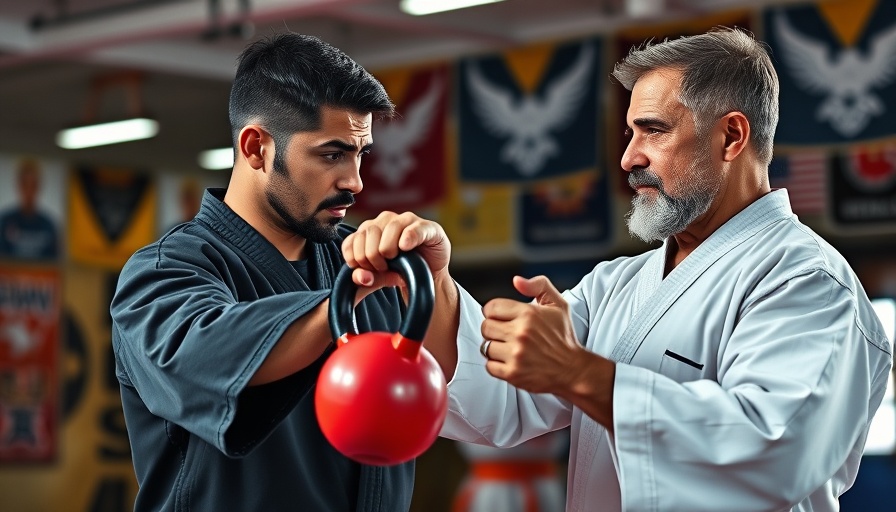
Martial arts instructor highlight compound exercises for functional strength.

The Power of Compound Exercises in Martial Arts

In martial arts, building functional strength is crucial for enhancing performance. For many practitioners, the key to achieving this lies in compound exercises. These movements involve multiple muscle groups, making them efficient for gaining power and improving coordination. Understanding how to integrate these exercises into your routine can make a significant difference not just in strength, but also in overall athleticism.

Why Choose Compound Exercises for Strength?

Compound exercises stand out because they are more than just a workout; they train multiple muscle groups at once. Engaging various muscles simultaneously fosters greater neuromuscular coordination. This is essential for martial practitioners who need to perform complex movements fluidly. Benefits include increased testosterone and growth hormone levels, leading to muscle growth and fat loss, making these movements especially beneficial for martial artists of all levels.

Key Compound Exercises for Martial Artists

Here are specific compound exercises designed to strengthen essential aspects of martial arts training:

Lower Body Strength and Explosiveness

  • Squats: Whether using a barbell, dumbbells, or your own body weight, squats target the quads, hamstrings, and glutes. They enhance leg strength crucial for delivering powerful kicks. Variations like goblet squats and jump squats add versatility.
  • Deadlifts: Known for building power in the posterior chain, deadlifts work the hamstrings and glutes, improving grip strength for grappling. Whether conventional or Romanian, this exercise is a staple.
  • Lunges: These exercises improve balance and lateral movement abilities, which are important for agility in martial arts. Stationary or walking lunges can be performed to increase both strength and endurance.

Upper Body Strength and Coordination

  • Push-Ups: Modified in many ways, push-ups build strength in the chest, shoulders, and triceps—key areas for punching power. Variants like clap push-ups add a challenging twist.
  • Pull-Ups: This exercise enhances upper body strength, essential for grappling. Variations, including weighted pull-ups, can further intensify the workout.
  • Overhead Press: Utilizing either dumbbells or a barbell, this exercise strengthens the shoulders and triceps, crucial for effective striking.

Core and Rotational Strength

  • Rotational Exercises: Movements like Russian twists with a medicine ball can develop rotational power vital for striking and grappling transitions.
  • Turkish Get-Ups: Known for its comprehensive muscle engagement, this exercise trains the entire body, especially the core and shoulders, enhancing overall strength.

Integrating Compound Exercises into Your Routine

For martial arts students in Gurnee or anywhere seeking to develop strength, incorporating these compound exercises into your training will yield dividends. Whether enrolling in Martial arts classes Gurnee or joining a local dojo, integrating strength training within your schedule is essential. Parents can also consider Kids martial arts Gurnee programs that emphasize these exercises to build foundational athletic skills.

Inspiration from the Martial Arts Community

Many champions attest to the power of building strength through compound exercises. As they highlight their training routines, it becomes clear that such methods are not just for bodybuilders or fitness enthusiasts, but are essential for martial artists aiming to enhance their skill levels.

Call to Action

If you're looking to improve your martial arts journey, start prioritizing compound exercises in your training today. Consider signing up for classes at a local Gurnee martial arts school to ensure you're on the right path toward achieving your goals in martial arts.

Martial Arts Training

0 Comments

Write A Comment

*
*
Please complete the captcha to submit your comment.
Related Posts All Posts
04.06.2026

Tai Chi's Historical Roots: Empress Cixi's Surprising Influence

Update Unveiling the Journey of Empress Dowager Cixi The fascinating story of Empress Dowager Cixi, who navigated her way from a humble concubine to the true power behind the throne, reflects the complexities of Chinese culture and politics during a transformative era. When Cixi ascended to prominence amid the political climate of the Qing dynasty, she became a pivotal figure in the introduction of Tai Chi to the imperial court, an event that marked a rich tapestry of cultural integration. Historical Context: The Stage for Tai Chi Understanding Cixi's influence requires a glance back at her time. As the Qing dynasty began to falter under internal strife and external pressures, Cixi took control at a moment when the ruling elite sought to connect with the broader Han population. According to National Geographic, her formidable leadership not only challenged norms but also helped propel China into modernity. The arrival of Tai Chi served as a cultural symbol during this time, offering a means to foster unity and redefine 'Chineseness.' As noted in discussions of martial arts history, Tai Chi's introduction can be viewed as a strategic response to the declining identity of the Manchu rulers. Counterarguments: Debating Tai Chi's Cultural Roots While many celebrate Tai Chi as a hallmark of Chinese tradition, theories have emerged questioning its roots in Neo-Confucianism rather than Taoism. A recent examination of Tai Chi's philosophy suggests that it may be more intricately connected to Confucian values than previously thought, a perspective that has stirred debate among enthusiasts and scholars alike. Critics argue that attributing Tai Chi's cultural significance exclusively to Taoism overlooks its role as a social bond within the imperial court during Cixi's reign. Why This Information Matters to Martial Arts Enthusiasts For martial arts practitioners today, understanding the history behind Tai Chi enriches their practice. The arrival of Yang Luchan in the imperial court, under the patronage of Cixi, positioned Tai Chi not just as a martial art but as a bridge between tradition and modernity. In a dojo or martial arts studio in Gurnee, lessons on Tai Chi can provide insights into the evolution of martial arts as they emphasize harmony, balance, and self-discipline—principles that are as relevant to modern practitioners as they were during the Qing era. Transformative Legacy: From Cixi to Contemporary Practice As Cixi’s reign continues to inspire, her legacy in championing cultural symbols like Tai Chi offers valuable lessons for today's martial artists. By recognizing and respecting these historical influences, martial arts schools like those in Gurnee can foster a deeper appreciation for their practices. Courses in Gurnee, including martial arts classes, karate lessons, and family programs, can with traction infuse these lessons of history into their training sessions, ensuring that practitioners comprehend the art's heritage. Your Invitation to Explore Martial Arts If you are interested in embodying the resilience and grace showcased by figures like Empress Dowager Cixi, consider enrolling in our karate classes in Gurnee, designed to promote fitness, self-defense, and an understanding of martial arts' deep cultural roots. Understanding the past enhances our present—don't miss this opportunity!

04.05.2026

Exploring Tai Chi: Is Posture More About Class Than Biomechanics?

Update Understanding the Intersection of Class and Posture in Tai Chi The art of tai chi has long been celebrated for its physical, mental, and spiritual benefits. However, a closer examination reveals a deeper layer to this ancient practice—one that intertwines the concepts of class, culture, and identity. The Cultural Context of Posture As discussed in the lectures of cultural historian Sander L. Gilman, posture is not merely a biomechanical issue; rather, it is steeped in cultural significance. From the upright posture that signifies control and refinement to the more relaxed postures associated with working-class bodies, our physicality reflects societal norms and beliefs. For generations, how one stands can symbolize discipline and respectability, often mirroring an individual’s social standing. Tai Chi Posture: A Reflection of Social Background When we apply this cultural lens to tai chi, it becomes evident that the various styles of posture reflect the differing social contexts in which they were developed. Upright forms, such as those seen in Wu (Hao) style or Sun style, often align with a background of scholarly and courtly practices. Conversely, styles like Yang, which lean forward, emerged from environments more focused on practical application and physicality, often associated with martial artists and soldiers. The Impact of Historical Narratives on Current Practices This historical duality brings us to an important crossroads in contemporary martial arts. In Gurnee, martial arts schools offer a wide array of classes, from karate to self-defense training, each influenced by its historical roots. Understanding the legacy of these forms provides practitioners and students not only with technique but also with a sense of belonging and identity. This cultural heritage informs how martial arts are taught and perceived today. Navigating the Modern Debate: MMA vs. Tai Chi In recent years, the conflict between modern mixed martial arts (MMA) and traditional tai chi has sparked intense debate. The viral incident of MMA fighter Xu Xiaodong challenging and defeating a tai chi master laid bare the vulnerabilities of traditional practices against contemporary fighting methods. This clash raises questions about the relevance and adaptability of traditional forms in a rapidly evolving world. But rather than viewing this as a polarizing argument, it invites us to reflect on how both disciplines can inform and enrich one another. Building a Community Through Cross-Training Pioneering martial artists realize that the true essence of martial arts lies in community and learning from one another. Through cross-training, students of differing arts—be it tai chi, karate, or kickboxing—can gain holistic insights into their practice while growing as individuals within a supportive community. Gurnee offers ample opportunities for families, adults, and teens to explore various martial arts classes, promoting inclusive learning. Conclusion: The Path Forward Whether you find yourself in a dojo learning karate or participating in tai chi in the park, remember that the spirit of martial arts transcends mere physicality. By embracing a perspective that values cultural nuances, we strengthen our connection not only to the art but also to the collective identity of martial arts enthusiasts. The real benefit lies in understanding our past and how it shapes our present—and perhaps even our future in martial arts.

04.04.2026

South Korea's Ginseng Culture Beckons UNESCO Status; Taekwondo Awaits Recognition

Update The Essence of Ginseng: A Living Heritage South Korea is taking significant steps to preserve and promote its cultural heritage by applying for UNESCO recognition of ginseng culture. Known locally as 'insam,' ginseng has deep roots in Korean history, tied to health and longevity beliefs. The application titled "Insam Tradition: Knowledge, Skills, and Cultural Practices Related to Ginseng in the Republic of Korea" emphasizes the importance of cultivation techniques, processing methods, and associated customs. This initiative is a testament to the resilience and solidarity of the Korean people, whose traditions are meticulously passed down through generations. Unpacking the Taekwondo Training Tradition Hot on the heels of the ginseng nomination, South Korea is also preparing to submit taekwondo for UNESCO's Intangible Cultural Heritage recognition. The Korea Heritage Service (KHS) is promoting the tradition with a proposal titled "Taekwondo: Korean Training Tradition Centered on Dojang". This inscription focuses on the values nurtured in dojangs (training halls), where knowledge and skills are imparted from masters to their students. The practice of taekwondo isn’t merely a martial art but a way of life that fosters community, respect, and discipline. A Tale of Two Nominations In an interesting twist, North Korea has also submitted its own application for taekwondo under the title "Taekwon-Do, Traditional Martial Art in the Democratic People's Republic of Korea". Both Koreas are vying for recognition, which could potentially complicate the submission process. The hope is for a joint recognition akin to the successful collaboration for ssireum, or traditional Korean wrestling, recognized by UNESCO in 2018. By presenting culture as a unifying force, both nations highlight the importance of these traditions in fostering identity and community engagement. The Importance of Authentic Cultural Practices The recognition of ginseng and taekwondo as intangible cultural heritage is not only about honor but also about preserving authenticity. As modern influences encroach upon traditional practices, entities like the KHS strive to maintain the integrity of these cultures. Ginseng farming involves expert techniques passed down through generations, deeply rooted in Korean agricultural history. Likewise, taekwondo emphasizes values such as respect and perseverance, integral components of personal development. Legacy and Future Aspirations The path toward UNESCO recognition for both ginseng and taekwondo is set to culminate in December 2028 when final decisions will be made. If successful, these nominations will enhance global awareness of these traditions, inviting wider participation in cultural exchanges. As these applications progress, local communities in Gurnee and elsewhere can benefit from related events or workshops, cultivating an appreciation for martial arts and wellness traditions. Actionable Steps for Interested Practitioners For those interested in martial arts or cultural heritage, now is a crucial time to engage with local programs. Explore youth karate programs, participate in family self-defense activities, or even attend workshops that delve into the cultural significance of martial arts. Participating in local dojo classes can also deepen one’s understanding of how physical discipline intersects with cultural practices. As ginseng gains recognition abroad, consider adopting its health-related teachings into your lifestyle. Many local karate schools in Gurnee are offering classes that incorporate these wellness principles along with martial arts training. Stay engaged with the evolving narratives of ginseng and taekwondo and consider how you can be a part of the ongoing cultural dialogue.

Terms of Service

Privacy Policy

Core Modal Title

Sorry, no results found

You Might Find These Articles Interesting

T
Please Check Your Email
We Will Be Following Up Shortly
*
*
*