
Add Row
Add Element
The Karate Edge Logo
update
The Karate Edge
update
Add Element
  • Categories
    • Martial Arts Training
    • Self Defense & Practical Skills
    • History & Philosophy
    • Injury Prevention/Recovery
    • Competitive Karate & Belt Advancement
    • Mind & Body Conditioning
    • Women's Martial Arts
  • Home
July 27.2025
3 Minutes Read

Exploring Traditional Japanese Swordsmanship and Its Modern Relevance

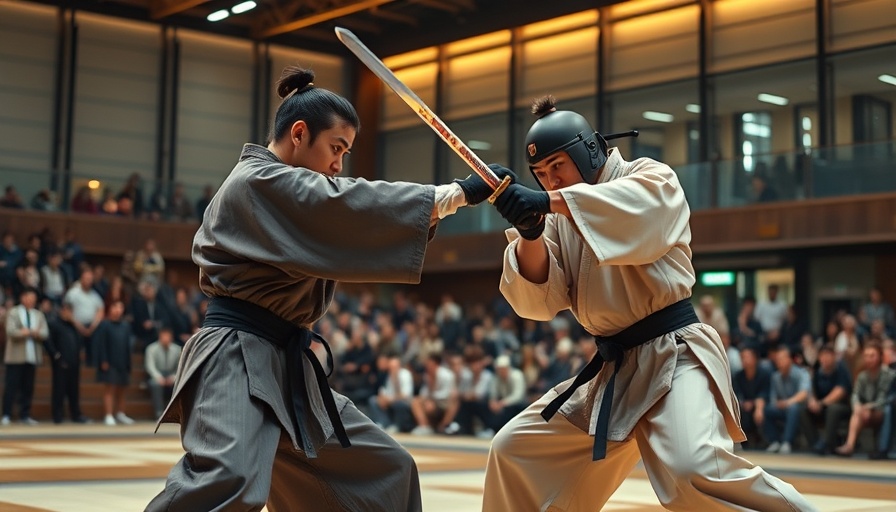
Traditional Japanese swordsmanship competition in action at an indoor arena.

The Essence of Traditional Japanese Swordsmanship

Traditional Japanese swordsmanship isn't just about the physicality of wielding a katana; it embodies a philosophical journey that integrates discipline, focus, and respect. At the recent Hogyokukai Championship in Tokyo, which saw over 500 participants, the spectacle captured by Johan Brooks highlighted not just the combat skills but also the spiritual aspects that practitioners deeply cherish. Participants don traditional attire, bow before their opponents, and enter a realm where every movement has weight and purpose.

A Cinematic Display of Skill and Tradition

The matches are reminiscent of classic samurai films, where slow builds of tension explode into swift, decisive movements. Each duel is a choreography underscored by years of training and dedication, epitomized in the awe-inspiring moment right before the fighters draw their swords. Embedded in the cultural tapestry of Japan, this event showcases a dynamic mix of heritage and community spirit, ensuring that the art form remains relevant and cherished in modern times.

Women and Children in the Art of Iaido

One noteworthy trend observed at this year’s championship was the increasing participation of women and children. As martial arts evolve, schools around Gurnee and beyond are stepping up to provide inclusive programs that cater to everyone, from young kids to adults. This inclusive atmosphere not only enriches the dojo community but also helps to demystify traditional martial arts, making them accessible and appealing to a broader demographic.

The Path to Mastery: Training Methodologies

Training in iaido emphasizes precision and mindfulness. At local karate instruction hubs in Gurnee, similar principles apply. The foundations of martial arts—balance, timing, and respect—are essential, encouraging students to cultivate both physical skill and mental resilience. Whether engaging in karate workshops or pursuing youth karate programs, practitioners learn the significance of patience and persistence within the dojo environment.

The Importance of Competitions

Tournaments like the Hogyokukai Championship serve as both a platform for showcasing skills and a forum for camaraderie amongst practitioners. Competitors not only challenge each other but also build a supportive community that underscores the values inherent in martial arts. As one participates in local karate competitions in Gurnee, the emphasis often shifts from mere victory to personal growth and shared experience.

Future Directions of Traditional Martial Arts

As martial arts continue to gain popularity, particularly in urban settings like Gurnee, the integration of traditional practices with contemporary training methods will redefine how these arts are perceived. With the rise of concerns about personal safety, adult self-defense classes in Gurnee are becoming increasingly popular. The lessons learned in swordsmanship can translate powerfully into practical self-defense, ensuring that the art remains relevant in everyday life.

Call to Action: Join the Martial Arts Movement

Are you inspired by the beauty and discipline of traditional martial arts? Gurnee’s 5 Star Rated Martial Arts School is enrolling new students! Don't miss out on the chance to become a part of this enriching community—classes fill quickly, so act fast! For inquiries, contact Sensei at Gruber's Karate: (224) 347-6655 or visit GrubersKarate.com.

Write A Comment

*
*
Related Posts All Posts
12.12.2025

Yuen Woo-Ping: A Martial Arts Maestro Revolutionizing Cinema and Life

Update The Legacy of Yuen Woo-Ping: More Than Just Martial Arts The storytelling through martial arts choreography is an intricate art that demands both skill and a deep understanding of narrative. At the helm of this revolution in cinema is Yuen Woo-Ping, a master martial artist and prolific fight choreographer who has changed the landscape of action films, bridging culture and captivating audiences worldwide. From Humble Beginnings to Global Recognition Born in 1945 into a legendary martial arts family in China, Yuen Woo-Ping was immersed in a world of movement and storytelling from a young age. His father, Yuen Siu-tien, was a renowned actor in the Peking Opera style, and it was this environment that nurtured Yuen's talent and passion for fight choreography. His first major projects, including Snake in the Eagle’s Shadow and Drunken Master, defined his early career and set the stage for his pioneering work in the martial arts film genre. Transforming Swordplay: The Philosophical Approach Yuen Woo-Ping's films are known not just for thrilling action but also for the deep philosophical underpinnings that guide them. His portrayal of swordplay, particularly in movies like Crouching Tiger, Hidden Dragon and its sequel, blends combat with narrative expression. Yuen has a unique ability to use sword combat as a storytelling device, showing that every movement is a part of a larger emotional arc, not just an action sequence. An Empire of Influence: East Meets West in Cinematic Craft After establishing his reputation in Hong Kong cinema, Yuen made waves in Hollywood, where his innovative style became a key element in iconic films like The Matrix trilogy. The combination of wirework and unique choreography initiated a transformation that changed how fight scenes are conceived and executed in Western cinema, demonstrating a harmonious blend of artistry and athleticism. Impact Beyond the Screen: Training the Next Generation Yuen's influence extends beyond his choreographed scenes; his legacy is embedded in the very fabric of martial arts culture. He is not only recognized for his breathtaking choreography but also for nurturing the talents of actors such as Donnie Yen and Uma Thurman, elevating their abilities and contributing to their development in this competitive industry. His commitment to training and mentorship ensures that the art of martial choreography will continue to evolve. The Emotional Connection of Martial Arts in Cinema As discussed through his various works, Yuen Woo-Ping showcases the emotional connection that martial arts can foster in individuals. By portraying conflict through storytelling, he allows audiences to engage with martial arts on a deeper level. This exploration invites viewers to see martial arts films as not just displays of physical prowess but as reflections of human experience, resilience, and emotion. Why Understanding this Artform is Vital for Future Generations Yuen’s approach to martial arts interweaves themes of discipline, resilience, and emotion, mirroring the broader impacts of martial arts on mental health. With many residents in Gurnee looking for martial arts classes tailored for kids and adults, understanding the emotional benefits of training is crucial. It’s this connection that helps enthusiasts develop resilience in life, whether through traditional karate or contemporary forms. Join the Martial Arts Movement in Your Community As Yuen Woo-Ping continues to shape narratives through cinematic martial arts, now is the perfect time to embrace martial arts in your own life. For those in Gurnee, exploring options such as martial arts classes for kids or self-defense courses could cultivate confidence and emotional strength. There’s no better moment than now to discover how martial arts can positively impact your life!

12.12.2025

Unlocking the Secrets of Jiǎo Lì: Ancient Techniques for Modern Self-Defense

Update Understanding Jiǎo Lì: The Foundation of Chinese Wrestling Jiǎo Lì (角力) is not just a term; it's a representation of one of the earliest forms of unarmed combat dating back to ancient China. Often translated as "wrestling" or "grappling," Jiǎo Lì encompasses a broader spectrum of techniques that include throwing, controlling, lifting, and off-balancing opponents. Its origins are traced back to the Zhou Dynasty, marking a significant evolution in the art of hand-to-hand combat. Historical Significance: Documents that Shaped a Martial Art The earliest documented references to Jiǎo Lì appear in ancient texts like the Zhouli, which highlights physical training activities associated with grappling. Although these texts don’t detail exact techniques, they serve as a testament to the long-standing cultural relevance of structured unarmed contests. The Shiji also offers narratives of contests that include grappling actions, affirming the historical prominence of Jiǎo Lì within Chinese martial arts. The Han Dynasty: A Period of Structured Training During the Han Dynasty, Jiǎo Lì began to evolve more clearly into a recognized martial art. Public records of displays of strength and wrestling further cements its practicality and effectiveness within military contexts. Historian Wang Shixiang notes that these public demonstrations almost certainly included Jiǎo Lì techniques. Relief carvings unearthed from tombs in regions like Sichuan and Shandong showcase grappling stances, visually linking them to later styles, such as Shuai Jiao. A Crossroad: Jiǎo Lì and Shuai Jiao Jiǎo Lì often finds itself discussed in parallel with Shuai Jiao, another traditional form of Chinese wrestling, which shares its roots. Both systems emphasize grappling techniques, but while Jiǎo Lì focuses more exclusively on wrestling, Shuai Jiao incorporates a rich array of striking, joint locks, and throws. The evolution of these arts can be fascinating, as they highlight the blending of combat techniques that historically served military needs. Practical Application: Why Jiǎo Lì Matters Today For martial artists today, understanding Jiǎo Lì provides invaluable insights into traditional techniques that enhance contemporary self-defense practices. Within the context of a dojo or during self-defense training for adults, principles extracted from Jiǎo Lì can directly impact personal safety, street-effective karate techniques, and combative strategies. With classes focusing on these traditional forms of grappling, students can learn effective strategies grounded in centuries-old techniques while engaging in realistic martial arts training. Getting Involved: Finding Your Place in the Martial Arts Community If you’re in the Gurnee area and looking for traditional karate instruction that incorporates practical applications of Jiǎo Lì, there are several martial arts schools to explore. Programs like kata bunkai classes and practical Shotokan training can be especially beneficial. You might find that training not only develops physical skills but also builds confidence and discipline, essential attributes for personal growth. Conclusion: Embrace the Legacy of Jiǎo Lì As you explore the world of Jiǎo Lì and its application in contemporary martial arts, consider integrating these techniques into your practice. Understanding the roots of wrestling can profoundly influence your self-defense capabilities and martial arts philosophy. Start your journey today and experience the rich legacy of Jiǎo Lì!

12.12.2025

Exploring Jiǎo Lì and Shǒubó: Your Guide to Practical Karate Training

Update Understanding Jiǎo Lì and Shǒubó: A Historical Perspective Jiǎo Lì (角力) and Shǒubó (手搏) often come up in conversations surrounding Chinese martial arts, enriching the narrative of unarmed combat's evolution. At first glance, scholars like Stanley Henning have pointed out their shared roots in military preparation and the physical training of fighters. However, a meticulous analysis reveals that while they are contemporaries in history, their techniques and purposes vary significantly. The Origins and Descriptions of Jiǎo Lì Jiǎo Lì boasts a rich historical lineage, predating Shǒubó and appearing prominently during the Zhou dynasty. Within Zhou texts, Jiǎo Lì is portrayed as a contest of strength, focusing primarily on gripping, lifting, and throwing techniques. Archaeological finds from the Warring States period depict figures engaged in grappling, hinting at structured training methods. Yet, the absence of direct references to striking techniques suggests that Jiǎo Lì is fundamentally a grappling art, focused on the physical contest instead of combative engagement. Shǒubó: Expanding the Definition of Combat Conversely, Shǒubó emerged later, specifically within Han-period literature, but its methodologies are not explicitly defined in historical texts. Although the Zhouli refers to physical training generally, it omits any mention of Shǒubó. The Hanshu does discuss contests, but without detailed descriptions. This lack of clarity invites historians to interpret Shǒubó as an art that potentially includes a wider array of skills—grappling, joint manipulation, and striking—albeit without structured guides. This interpretive evolution points towards an art that may have been integrated into formal military training. Key Differences: Purpose and Context One of the notable distinctions between Jiǎo Lì and Shǒubó is their intended purpose. Jiǎo Lì is predominantly referenced within the context of contests and trials, while Shǒubó subtly alludes to military training in Han texts. This contextual variance implies that Shǒubó served a functional role in combat readiness, potentially mirroring the adaptations of martial systems as they evolved for practical applications in warfare. The Modern Relevance of Historical Martial Arts In contemporary settings, understanding these martial arts not only enriches one's knowledge of combat history but also informs practical training techniques today. For individuals interested in self-defense or practical karate training, seeking a dojo that focuses on kata bunkai can provide insights into traditional approaches while applying them in real-world scenarios. In places like Gurnee, IL, martial arts schools focus on applied techniques, combining historical insight with modern self-defense applications. Final Thoughts: Choosing the Right Training Approach The varying historical contexts of Jiǎo Lì and Shǒubó serve as poignant reminders of how martial arts have morphed over centuries. For practitioners and hobbyists, blending historical knowledge with modern self-defense training can enhance their understanding and effectiveness in combative situations. For those in Gurnee exploring karate classes, consider institutions that emphasize practical instruction and combative philosophies reflective of this rich historical past.

Terms of Service

Privacy Policy

Core Modal Title

Sorry, no results found

You Might Find These Articles Interesting

T
Please Check Your Email
We Will Be Following Up Shortly
*
*
*